Water-Damaged Drywall Repair in Bayport, NY
Water-damaged drywall repair in Bayport, NY is a drying job before it is a drywall job. Gypsum board is a core of gypsum crystals between two sheets of paper, and both parts drink water. The paper feeds mold once it stays wet, and the core softens and crumbles. Get the moisture out and the board decided on before anything new goes up.
Storm water and pipe water
Bayport borders the Great South Bay, with Homan's Creek and Brown's River running through it, so storm water is a real part of the picture here. Nor'easters can bring severe coastal flooding to low-lying ground, and Wikipedia describes Hurricane Sandy in 2012 as the largest storm to affect the region since 1938. Water that came off the street or out of the bay counts as contaminated, and any board it reached comes out rather than being dried.
Clean water from a cracked supply pipe, a split laundry hose or a leaking toilet valve is different. If it is caught within a day or two and the board is still firm, drying in place can work. The meter makes that call; how the wall looks does not.
The flood cut
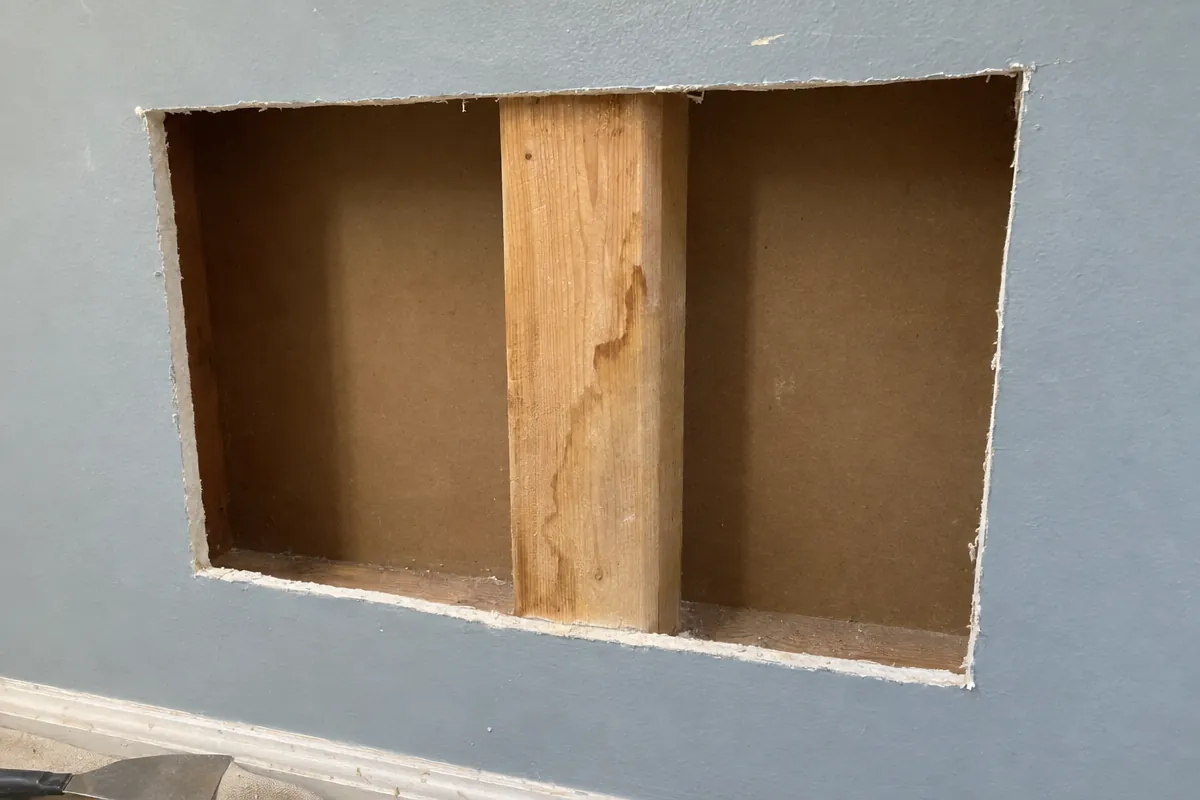
A flood cut is a straight, level cut across the wall above the highest wet point, often twelve inches or so past the visible line, because the gypsum keeps pulling water upward after the floor dries. Everything below comes out, along with wet insulation, so the studs and the back of the wall can dry. A neat band rebuilds better than a ragged hole: one long seam to tape and finish instead of a patchwork.
Water through a ceiling
When water drips from a ceiling or the board hangs low with it, switch off the breakers serving that ceiling's lights and fan before anything else. Next, empty the room underneath. A ceiling loaded with water can come down without warning.
Drying, then rebuilding
Studs and plates get checked with a pin meter until they fall back to a normal reading for framing lumber, and moving air with a running dehumidifier cuts the wait. Closing a damp stud behind fresh board traps moisture right where mold begins. Once everything is dry, the replacement panels follow, often a moisture-resistant or fiberglass-faced product in the lowest course of the wall, held clear of the floor by about half an inch. Seams are taped, coated three times, textured and primed.
Other damage pages
Ready for a number? You can tell us about the water damage, or check nearby hamlets from Bohemia to Patchogue.
Rentals and claims
Of Bayport's 3,309 occupied homes, 744 are rented, and a leak in a rental involves at least two people's belongings and schedules. Before demolition starts, photograph the room wide and close, with the high-water mark clearly in frame; an adjuster or landlord will usually ask for those. Note the day you discovered the water and its source.
FAQ
Is wet drywall ever salvageable?
Sometimes, if the water was clean, the board is still firm, and it dries out in roughly two days. Board touched by flood water, or soft and crumbling, is replaced.
Where does the flood cut stop?
Past the highest spot the meter still reads moisture, which tends to sit above the visible stain. Many jobs cut at one fixed height along the whole wall so the new seam runs straight and finishes cleanly.
When will the wall be closed up again?
Drying can take several days depending on how long the water sat. Rebuilding and finishing a flood cut takes another two or three days for the coats to dry.
What about mold behind the wall?
Mold on the back of board or on studs has to be handled ahead of any replacement panels. Widespread growth is its own trade, mold remediation; mention any musty smell when you describe the damage.
Should I take photos first?
Yes. Pictures taken before demolition, showing the waterline, back up an insurance claim or a report to a landlord.